









Marazzi Group today
Excellence in the ceramic coverings world
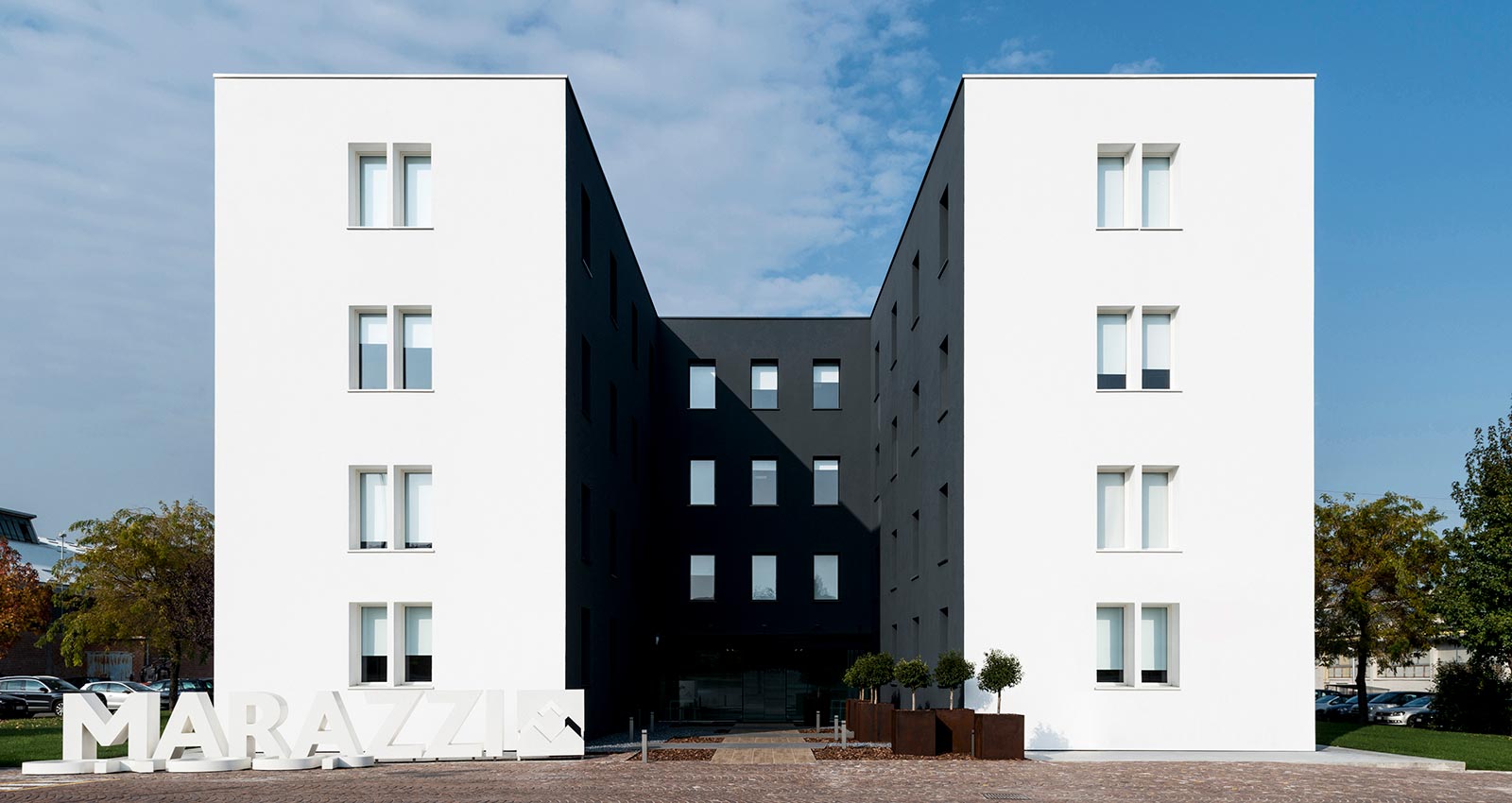
The Marazzi Group is an international leader in the design, production and marketing of ceramic and stoneware surfaces. Present today in more than 146 countries, Marazzi is universally recognised as synonymous with quality ceramic tiles, and symbolises the best of Italian style and manufacturing in the interior decoration and design sector.
In fact, Marazzi, founded in 1935 at Sassuolo, Modena, in an area which was to become the world’s leading-edge hub in the creation of high-end ceramic tiles, has been responsible for the main process and product innovations which have made the company and the district a benchmark for the entire ceramics world.
A predilection for research and experimentation, the ability to predict and respond to changes and developments in lifestyles, architecture and design, the prioritisation of the environment and sustainability, the internationalisation of sales and production, and constant investments in the growth of people and the business are the strong points that have enabled Marazzi to rise to the top of its industry, in Italy and internationally, and constantly confirm its leadership.
With a unique offering of products and services ranging from latest-generation large stoneware slabs to traditional small sizes, and from ventilated walls to floating floors, Marazzi is a key ceramic coverings benchmark for interior designers, architects, contractors, distributors, retailers and final customers.
The Marazzi Group has belonged since 2013 to Mohawk Industries, the world’s biggest flooring manufacturer, listed on the New York Stock Exchange.
In recent years, Marazzi Group has implemented a major investment plan to improve its products and processes, increase its production capacity and develop new Premium technologies. Under the plan, it has doubled the size of its Fiorano Modenese and Finale Emilia plants, reconstructed its historic Sassuolo factories and research laboratories, renovated its headquarters with new offices and new showrooms, restored and opened to the public the Crogiolo, the 1930s building where Marazzi was born, and inaugurated flagship showrooms in the main European cities, where professionals and consumers can encounter the brand in an immersive experience.
History
Origins
Marazzi Ceramiche was founded in 1935 in Sassuolo, in the province of Modena, in an industrial area dedicated since the 17th century to terracotta workshops.
It is said that the firm’s founder Filippo Marazzi constructed his first production plant using two parallel rows of poplar trees as pillars to support the building, founding what was to become known as the “Cardboard Factory” due to its flimsy structure.
In reality, this was the inauguration of a company that, thanks to the use of the best technologies available at the time, was to transform the craft of ceramic tile production into a modern industrial process, with kilns and processes that were ahead of the curve for the time.
The 1940s and 1950s. The first expansion
In the 1940s, the company started working with Venerio Martini, painter and ceramist, to develop the aesthetics and decoration of the product, and continued to do so through the 1950s when the company, now headed up by Pietro Marazzi, underwent its first major expansion in terms of size and mechanisation of production, thanks to large investments into new technologies and the search for innovative design solutions.
This expansion of its production enabled Marazzi to meet the increasing demand for ceramic tiles during the post-war period.
The 1960s. The Four Curve Tile
The late 1950s saw the start of the dialogue and partnership with the world of architecture, including the first contact with architects Gio Ponti and Alberto Rosselli, who created the “four curve tile”, first presented in 1960 at the International Exhibition of Modern Industrial and Decorative Arts at the Triennale in Milan, from which it takes its name. It was during the 1960s that the Sassuolo ceramics district was established, as more than 100 ceramics firms were opened around Marazzi and a few other
longer-established businesses.
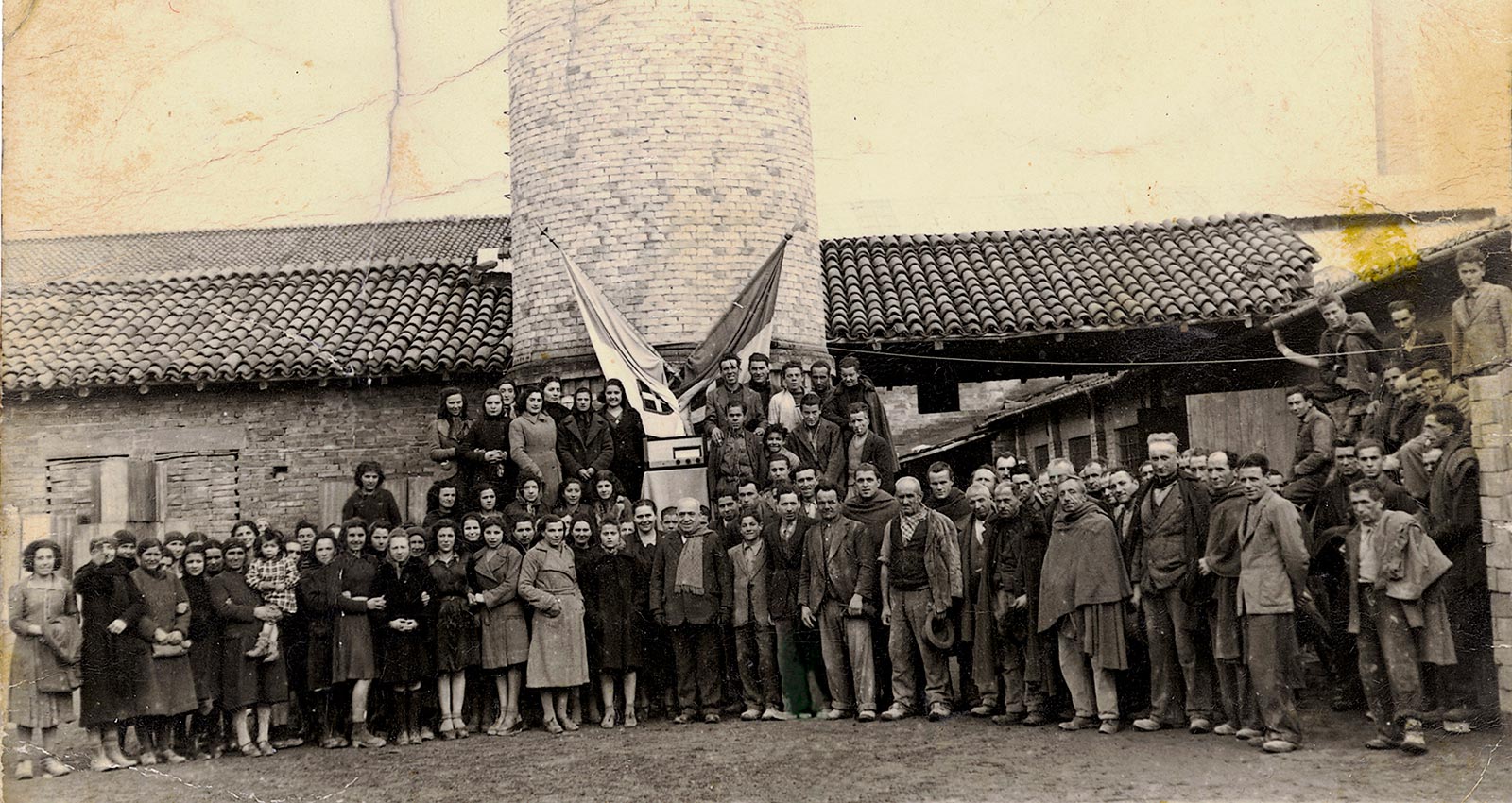
1930s The Marazzi workforce of the early years in Sassuolo

1940s “Stella”, designed by Venerio Martini
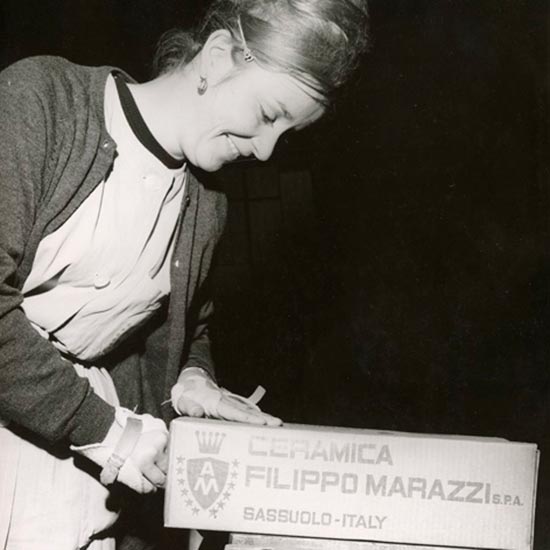
1960s Tiles are boxed by hand
The 1970s. Partnerships with big-name designers, fast single-firing and the first large size
Partnerships with big-name designers
The 1970s were a milestone period for the growth of Marazzi, marking a radical evolution of ceramic tile products both aesthetically and technologically. Breaking new ground once more, in 1970 Marazzi launched the Alta Moda collection, which linked the “humble” ceramic tile to the great names of Italian and international fashion.
Ceramics and fabrics were created with the same colours and decorative motifs. The creative talent of top designers including Biki, Paco Rabanne and Federico Forquet forged collections that adopted the total look concept before the term was ever invented.
In 1974, Nino Caruso, internationally renowned artist and sculptor, designed the “Marazzi Forme” collection, the first example of the industrialisation of three-dimensional ceramic modules, which superseded the division between floor and wall tiles to become architectonic structures and furnishings in their own right.
Luigi Ghirri and Marazzi 1975-1985
Luigi Ghirri, one of the most celebrated Italian artists of the last century, has shaped an entire photographic imagination, transforming objects in his everyday life and the entire surrounding landscape into authentic tools of conceptual reflection.
In his works with Marazzi (1975 – 1985), Ghirri moves away from photography’s documentary role and actively participates in the creation of a reality in which play, estrangement and experimentation with colour define a new visual experience.
Ghirri’s photographs evoke metaphysical moods in which the tile becomes prime mover in relation to the other features of the scene.
The patent for the fast single-firing process and the first large size
Its vocation for innovation led Marazzi to take its first technological leap in 1974 with the patent for the “fast single-firing process”, which revolutionised the production of ceramic tiles and is now the most widely used process worldwide.
The fast, simultaneous firing of body and glaze in one cycle reduced production times from 24 hours to just 1 hour, slashing energy consumption and also dramatically increasing plants’ productivity. This was the start of “greener”, stronger, more high-tech, more attractive ceramic coverings.
1975 saw the launch of the first large tile size, the single-fired 60×60 cm, and in 1977 great Italian photographer Gianni Berengo Gardin, famous for his work in black and white and his social reporting, was invited to the factory to shoot the ‘new high-speed production lines’, in one of his few colour projects.
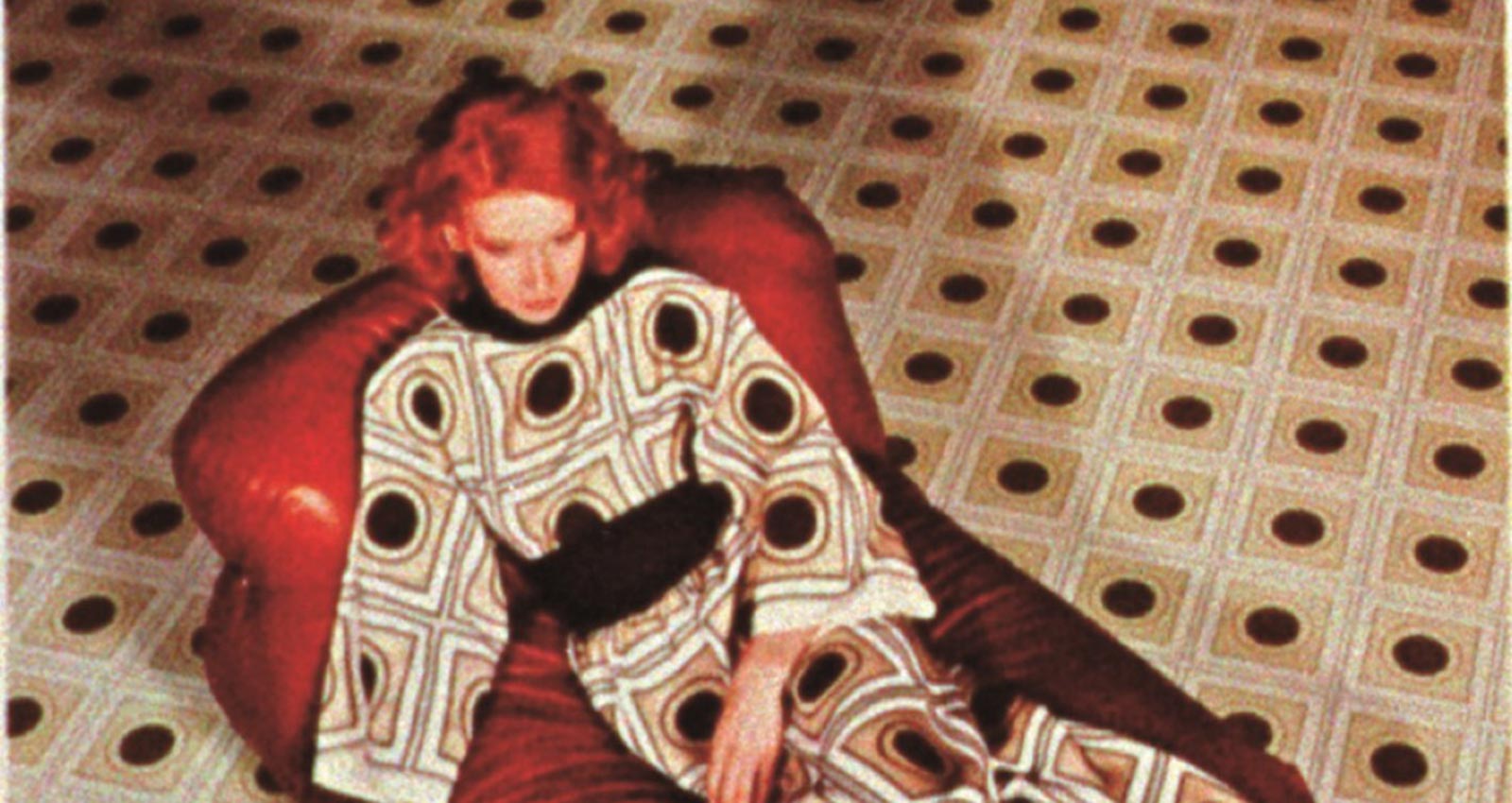
1970 Alta Moda Collection. “Bollo”, designed by Biki
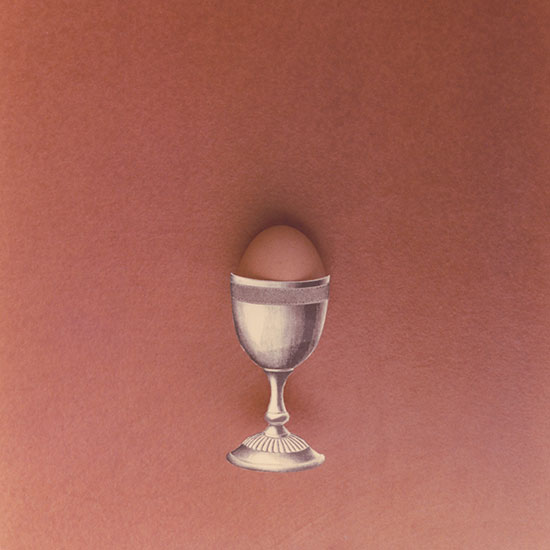
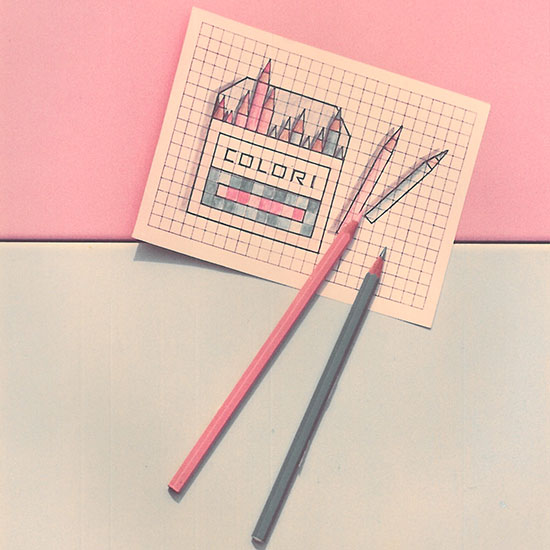
LUIGI GHIRRI The Marazzi Years 1975-1985 © Eredi Luigi Ghirri
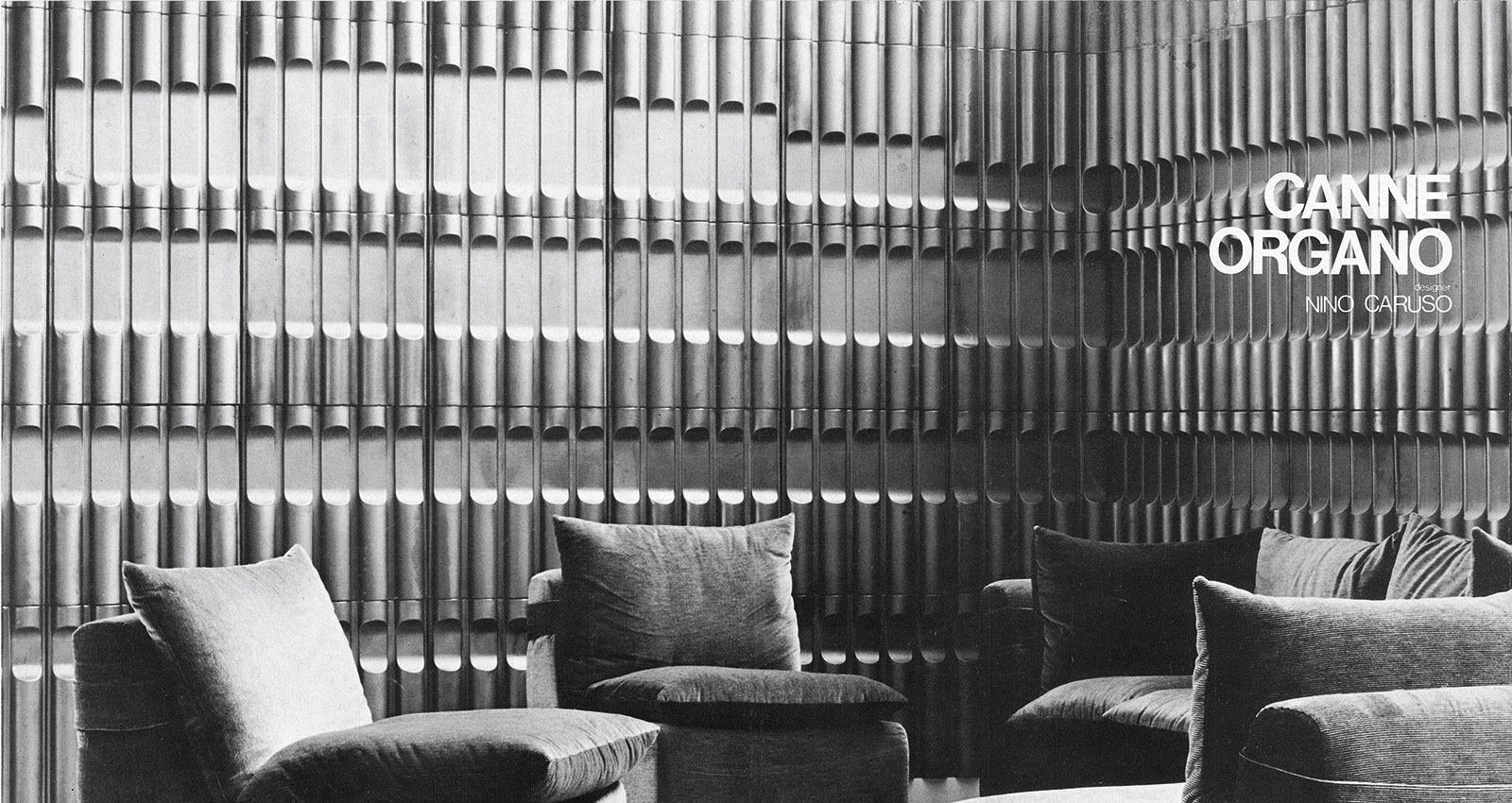
1974 Marazzi Forme Collection. “Canne d’Organo”, designed by Nino Caruso

1975 Marazzi sei grande (Big Marazzi) advertising campaign
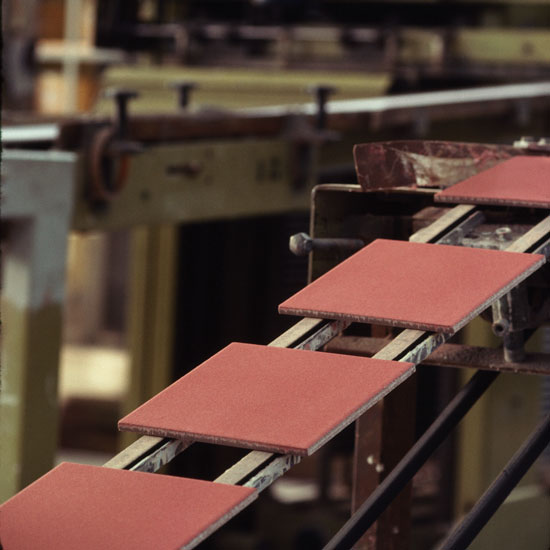
1977 Single-fired ceramic tiles. Ph. Gianni Berengo Gardin
The 1980s. Internationalisation, the first technical product and the Marazzi Crogiolo
Internationalisation
In 1978 the management of the company passed to the son of Pietro Marazzi, Filippo, who oversaw its internationalisation, making Marazzi the largest ceramic manufacturer in the world. Implementing its growth strategy, after opening plants in the United States and Spain, both in 1982, in 1989 the company acquired Ceramiche Ragno, at that time the second player in the Italian market and one of the architects, with Marazzi, of the growth and spread of Italian ceramic tiles worldwide.
The Enduro patent
Thanks to its on-going research into new solutions, Marazzi continued to remain ahead of the curve: in 1985 it patented “Enduro”, the first technical product with greatly superior performances in terms of hardness and wear-resistance thanks to the new technology in which glaze was applied to the incandescent substrate. The new technical characteristics made these tiles suitable for unprecedented intended uses: tough and anti-slip, for the first time they could be selected for the flooring and pavings
of public places exposed to heavy traffic and intensive wear, such as stations, hospitals, roads and squares.
The Marazzi Crogiolo
The Marazzi Crogiolo is the research centre opened in the 1980s to internationally famous architects, designers, artists and photographs, who were asked to give their own free, original interpretations of ceramic tile products. The Crogiolo gave birth to Marazzi’s “Sperimentazioni” – designer tiles by Roger Capron, Amleto Dalla Costa, Original Designers 6R5, Saruka Nagasawa and Robert Gligorov – and photographs by Luigi Ghirri, Cuchi White and Charles Traub.
Recently meticulously restored, the Crogiolo, the only surviving part of Marazzi’s first 1930s industrial site, is now a cultural centre also open to the public.
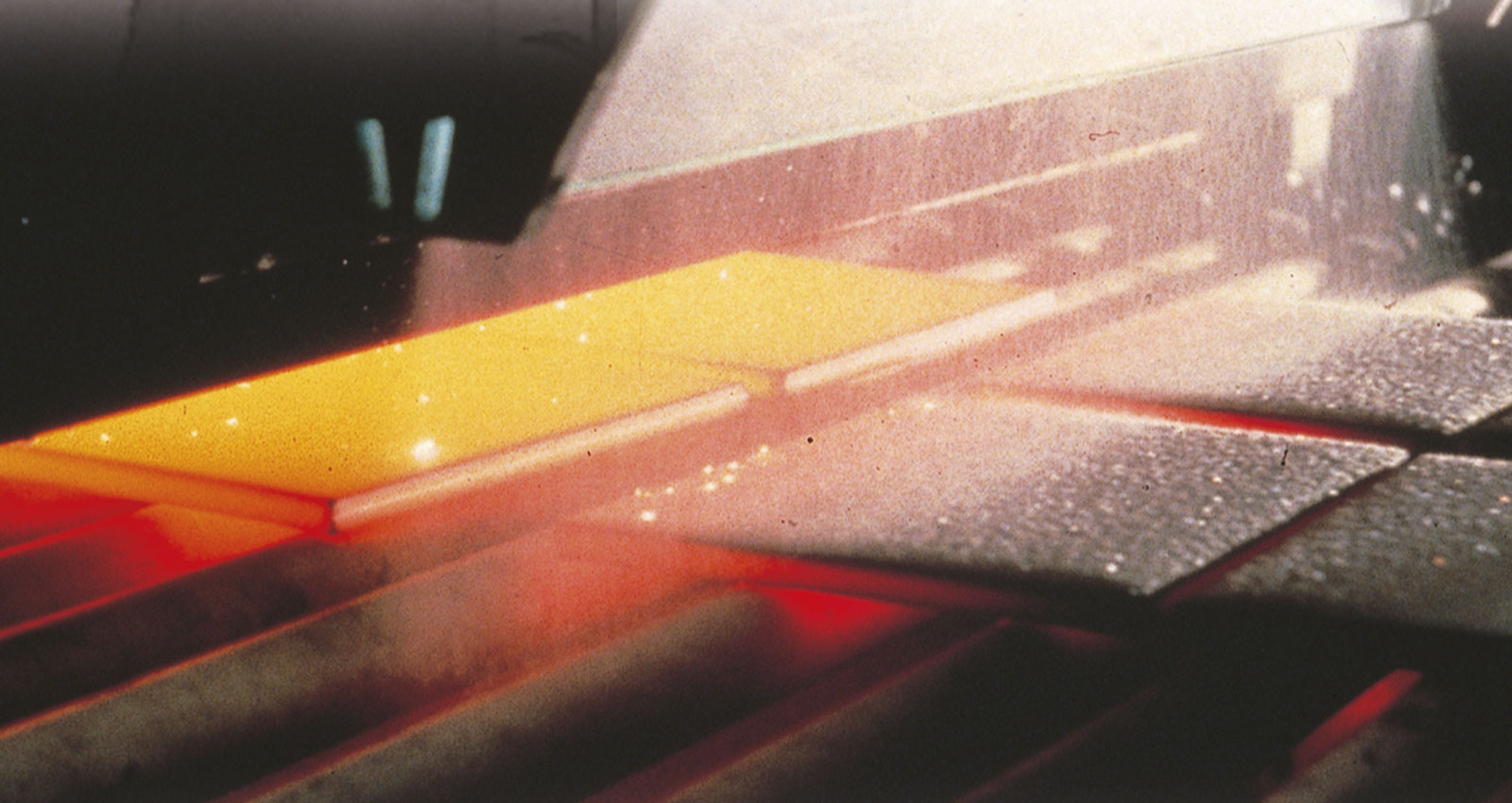
1985 Marazzi patents Enduro
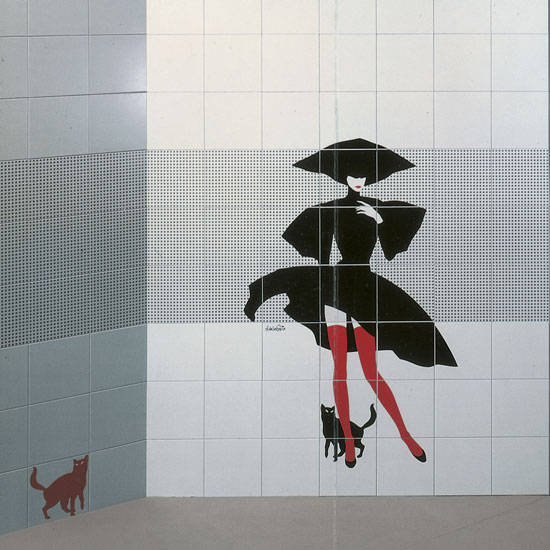
1980 “Donna col cappello”, designed by Amleto Dalla Costa

1980 Cuchi White for Marazzi
The 1990s. Colours and architecture
Ceramic coverings started to be used in major public projects such as subway systems, airports and large retail stores and malls. This period also saw a fresh focus on architectural design, with new ceramic solutions including ventilated walls and raised floors.
Those years witnessed the birth of Marazzi Tecnica, the brand under which the company offered architects and interior designers ceramic coverings for highly stressed vertical surfaces, and horizontal surfaces exposed to heavy traffic.
At the same time, colour took on a new importance and independence: the result was collections of extraordinary chromatic range and brilliance, such as “I Colori Marazzi”, used for the refurbishment and external cladding of the Torre Arcobaleno in Milan to coincide with the 1990 Soccer World Cup, held in Italy.
The 2000s. Large sizes and new markets
From 2000 onwards, Marazzi began to focus its development work on tile sizes, which continued to expand over time without sacrificing the very high performance of the materials, alongside the creation of new surface effects. The exclusive development of cutting edge digital technologies enabled Marazzi to innovate its styles and aesthetics even further, culminating in 2009 with the production of the first natural wood-look stoneware, “Treverk”, a collection of products which made the company leader in this market segment as well as opening up new applications for quality Italian ceramic tiles.
In 2011, “Soho”, the first three-dimensional stoneware tile, received an Honourable Mention at the ADI Compasso d’Oro Award – the most highly-prized accolade in the design sector – and was added to the Compasso d’Oro Award Historic Collection. In parallel with its product and process research, Marazzi continued its expansion into new markets, opening sales offices in Japan and the Arab Emirates. In 2004, it laid the foundation stone for a new plant near Moscow, and in 2005 it acquired the Welor Kerama group, market leader in Russia, operations which coincided with the company’s stock market launch.
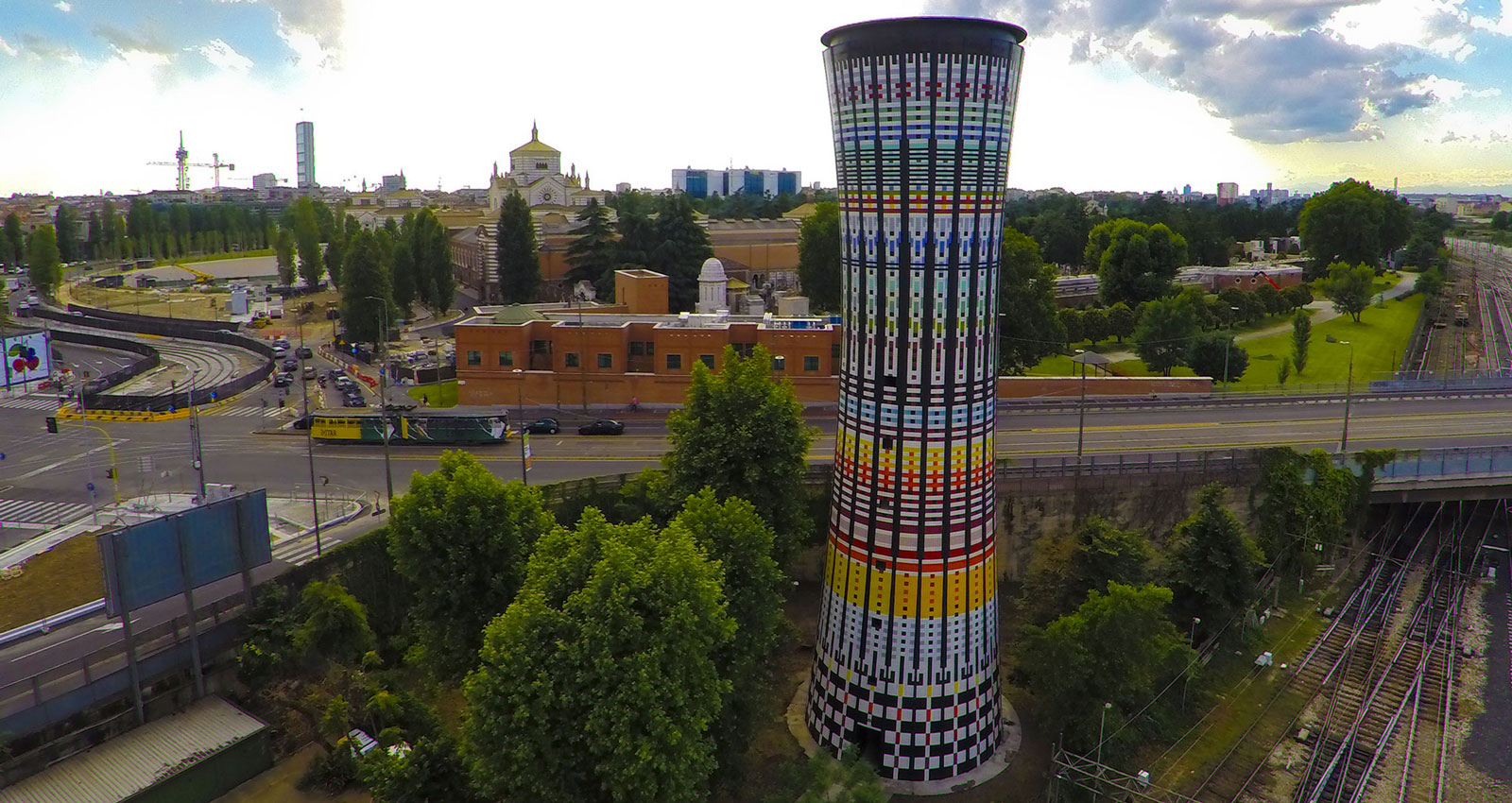
1990 Marazzi clads the Torre Arcobaleno - project by Original Designers - with “I Colori Marazzi”
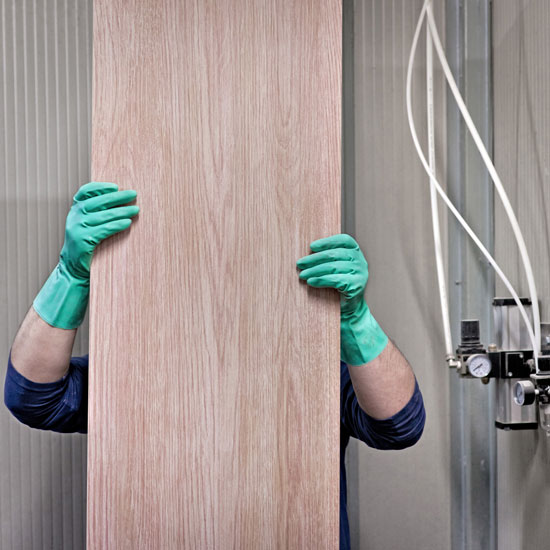
2009 “Treverk” Collection by Marazzi, the first natural wood-look stoneware
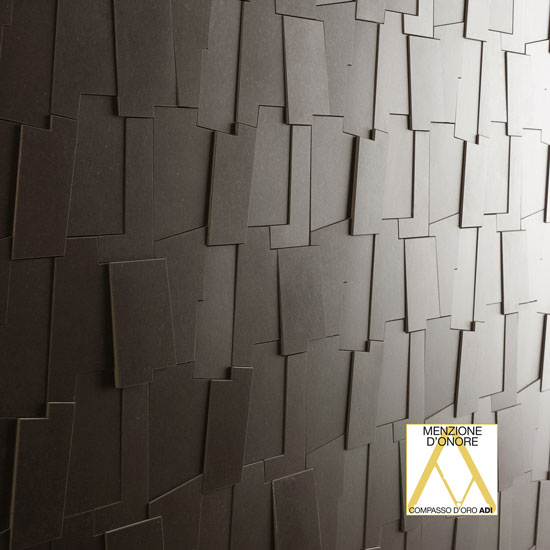
2011 “Soho” Collection by Marazzi, Honourable Mention at the ADI Compasso d’Oro Award
Mohawk Industries and the investment plan
In April 2013 Marazzi Group became part of Mohawk Industries, the world’s largest flooring manufacturer, a multinational headquartered in Georgia (United States) and listed on the NYSE, which purchased a 100% stake in the business, making it the world ceramics industry leader.
A major investment plan was launched to both improve and increase production capacity and develop the product range and brands, and its results were soon seen in a technological upgrade of Italian and European factories, the acquisition of Emilceramica and KAI Group, the renovation of the historic Sassuolo location and the opening of flagship showrooms in the top design capitals.
The new production sites and the new Laboratories
The new Fiorano Modenese plant was inaugurated in September 2015. The new plant doubled the production capacity of the site – from 4 to around 9 million square metres a year of high-quality porcelain stoneware – with the introduction of new presses, new kilns and the application of cutting-edge technologies for digital decoration, colouring, squaring, quality control, and the handling and packaging of the ceramic product. The new plants were designed with Italian technologies, at the state of the art also with regard to environmental sustainability.
The Finale Emilia plant, struck by the 2012 earthquake, was renovated in line with the strictest earthquake safety regulations and expanded with the construction of new production lines incorporating leading-edge technologies. When the new plants went into production, during 2016, porcelain stoneware production capacity was more or less doubled, with no rise in environmental emissions.
The new Marlit was opened in September 2018. Created by combining two existing production units, Marlit occupies an area of over 50,000 square metres within the historic Marazzi Group production site in Sassuolo, with new production lines with length, from the raw material area to the packaging department, of more than a kilometre and a half. This factory specialises in the manufacture of high-grade technical porcelain stoneware, digital stoneware and high-thickness stoneware, with production capacity of more than 9 million square metres a year.
All new plants, and the upgrading of all production lines, were designed, in Italy and Europe, with the most advanced Italian ceramics technologies, which guarantee products of outstanding technical and aesthetic quality with the highest degree of environmental protection, with state-of-the-art systems to recycle heat, wastewater and production waste, and to guarantee occupational safety and ergonomics.
As well as the renewal of the production lines, the investment cycle also included the complete reconstruction of the Research and Development and Quality Control Laboratories, which conduct all research operations into the raw materials, body mixes, colours and surface decoration of new products and the most rigorous quality testing. The new laboratories, with an indoor area of over 3,000 square metres and 1,000 square metres outdoors with large, well-lit zones divided by glass partitions to encourage cooperation and the exchange of ideas and information, reflect the historic corporate culture of the Marazzi Group, with its innate focus on research and innovation.
The headquarters, the Marazzi Crogiolo and the showrooms
The Sassuolo headquarters, which now employs more than 900 people, has undergone major refurbishment and renovation, to a project by Gianluca Rossi involving all the buildings overlooking Via Regina Pacis, the company’s historic site, with the office building and the new product showrooms. The plan also included the restoration of the Crogiolo, the oldest surviving Marazzi building, a historic reminder of the first industrial plant dating from the 1930s, which in the 1980s became a research
centre under this name, open to the experimental works of artists, architects, designers and photographers, invited to provide free interpretations of ceramic tile products, and is now an events hangar and cultural venue also open to the town of Sassuolo.
The flagship showrooms
To continue to strengthen the company’s position amongst the international community of architects and interior designers, in the last 11 years the development plan has included the opening of the flagship showrooms in Milan, in the Via Durini design district, and in Madrid in Calle Serrano in the heart of the city, both designed by ACPV ARCHITECTS Antonio Citterio Patricia Viel, in London, in the centre of Clerkenwell, in Paris in Saint-Germain-des-Prés, and in Hamburg, Athens, Cannes, Castellón, Dubai, Lyons and Warsaw, where architects, distributors, dealers and private customers can find a professional consulting service relating to the choice and application of ceramic coverings.
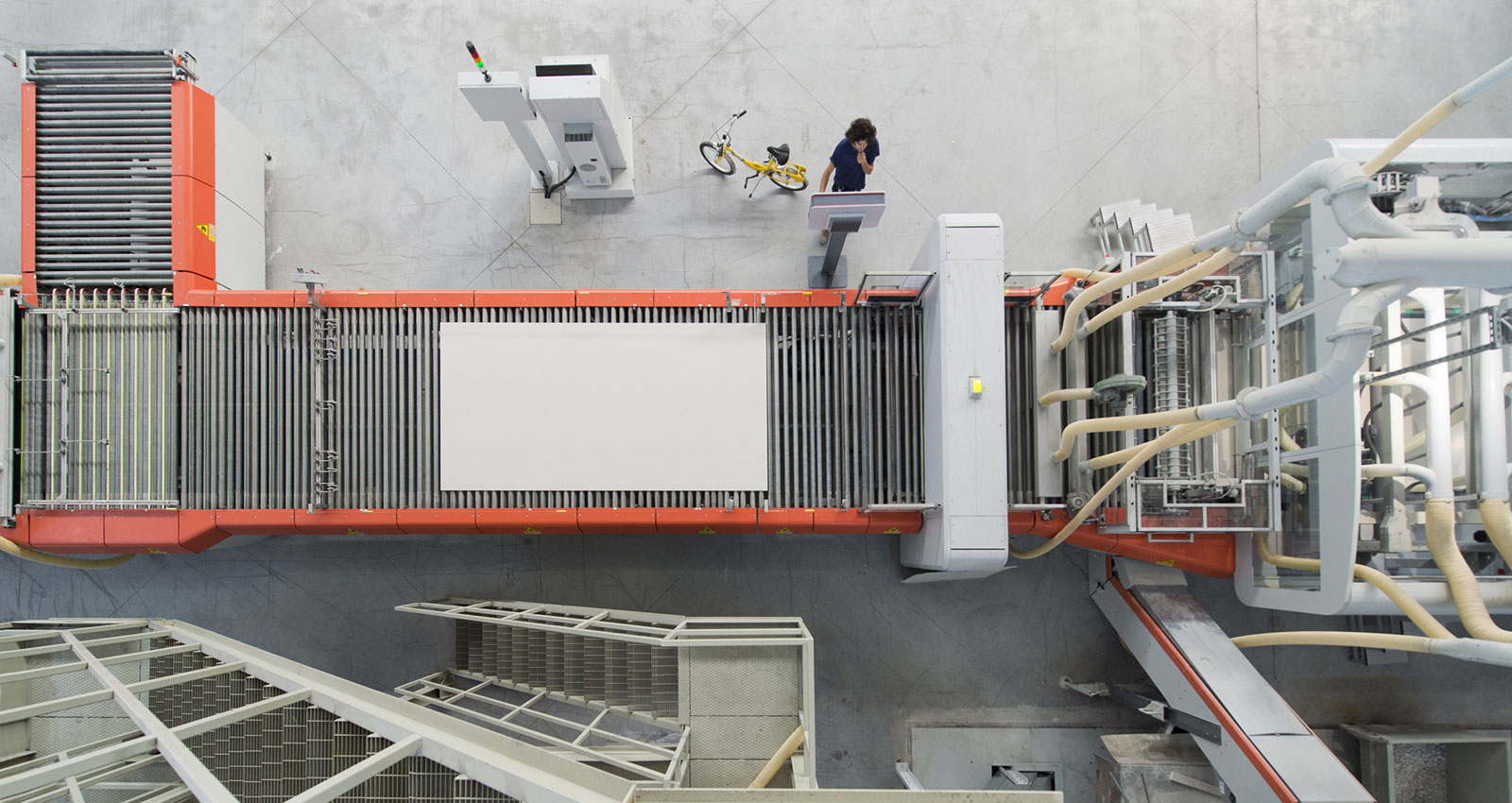
FIORANO MODENESE SLABS FACTORY View of the “Continua+” line
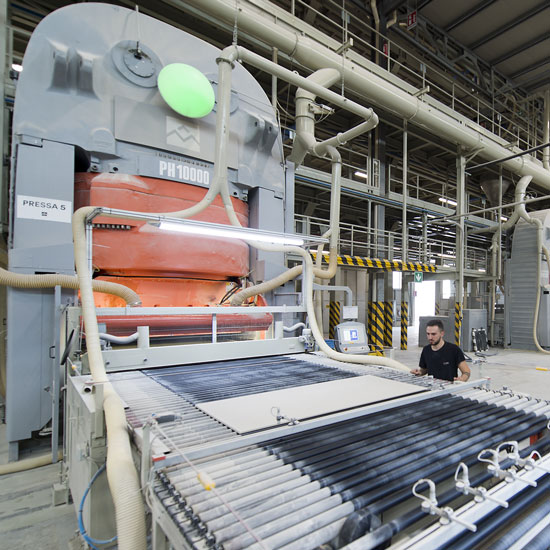
MARLIT FACTORY SASSUOLO View of the pressing department
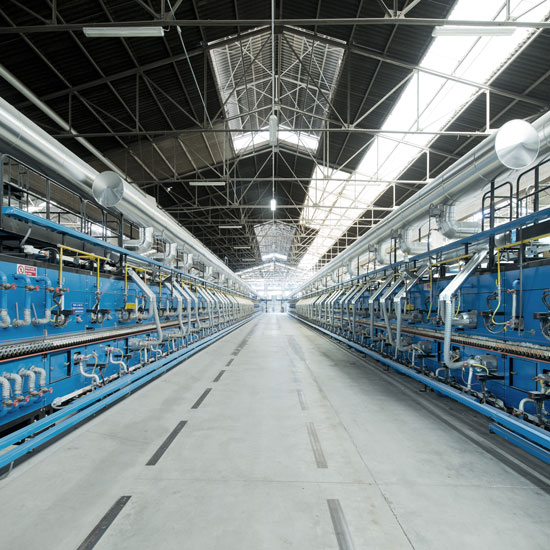
FIORANO MODENESE FACTORY View of the kiln area
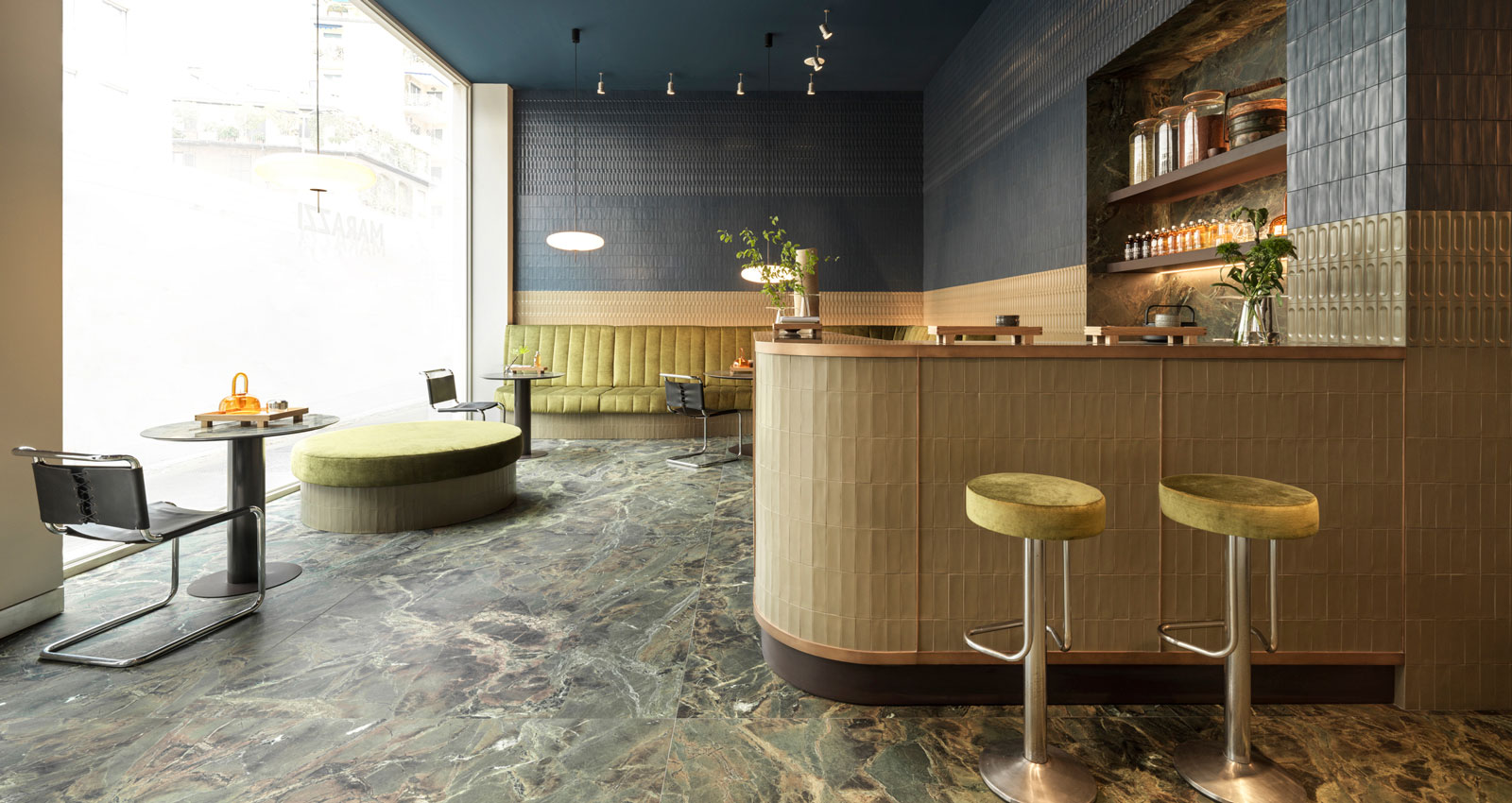
MARAZZI SHOWROOM MILAN The Green & Blue Room by ACPV ARCHITECTS
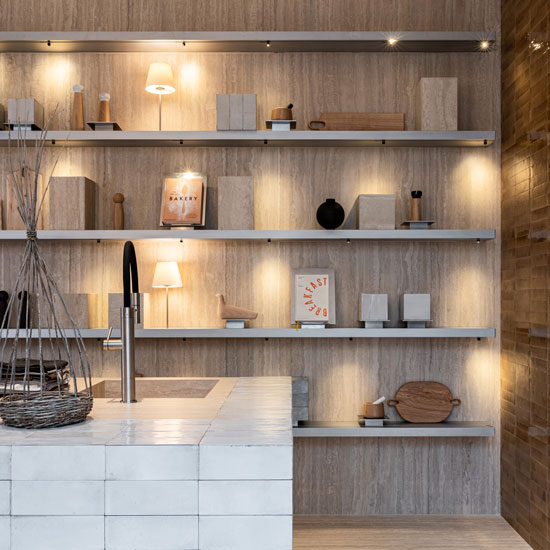
MARAZZI SHOWROOM MADRID The Welcoming Room by ACPV ARCHITECTS
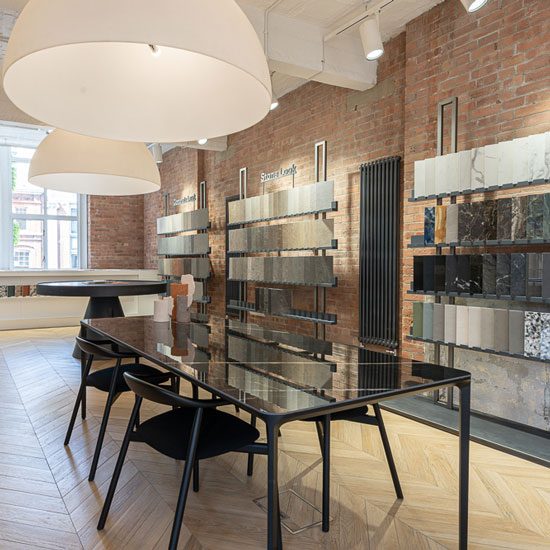
MARAZZI SHOWROOM LONDON
Products. Innovation and Design
Offering
Today ceramic and stoneware tiles are used on the floors and walls of residential buildings and, thanks to their outstanding technical and aesthetic characteristics, increasingly also in public spaces and major architectural projects.
Marazzi responds to the needs of contemporary home decoration and architecture with the widest assortment of ceramic and stoneware products, available in a variety of colours, thicknesses, surfaces and sizes – from the smallest and most traditional, which rediscover the beauty of industrial craftsmanship and handmade ceramics, up to large 162×324 cm slabs intended for kitchens, tables, backsplashes and an infinity of furnishing features. The Group’s Engineering Division offers the architecture and construction world technical consulting and solutions for the application of ceramic products in major projects, outdoors (pavings, renovation and construction of external facades, ventilated walls and urban furnishing features) and indoors (wall coverings, raised and other floorings, in commercial and industrial buildings, airports, schools and hospitals).
Projects, many designed by leading architecture firms, include:
- NH Hotels Fiera Milano – Milan, Italy – DPA Associates
- The “Oyster”, Salerno Maritime Station – Salerno, Italy – Zaha Hadid Architects
- Former Martinelli Site – Sondrio, Italy – Antonio Citterio Patricia Viel and Partners
- Cracco in Galleria – Milan – Studio Peregalli
- Corso Trento e Trieste (urban furnishing) – Lanciano – RicciSpaini Architetti Associati together with the Architecture and Design Department of Sapienza University of Rome
- Ceresio Building – Milan – Asti Architetti
Innovation and Design
Product innovation is expressed by Marazzi primarily in research into styling and technology, and is the key to its distinctive positioning in the market. Marazzi was the first company to perceive the need to establish ceramic tiles as key elements in interior decor, and create prestigious partnerships with some of the biggest names in architecture and design.
Ever since the early collaborations with architects Gio Ponti and Alberto Rosselli, who created the “four curve tile” in 1960, which has gone down in the history of design as the “Triennale”, Marazzi has continued to count on the efforts of prominent designers, associating its product with important names from the worlds of fashion and architecture and investing in in-house design laboratories to research trends worldwide and develop exclusive new products which have won major prizes in the field of design. The conception and design of products is coordinated and directed by the Marazzi Style Centre. The research process consists of an analysis of the market trends and consumer tastes, intended to pick up consumers’ needs and transform them into design ideas and product specifications. At the same time, the laboratory staff test surfaces, colours and decors and transform them into prototypes ready for industrialisation. The many awards and prizes received include the Wallpaper*Design Award in 2021 and the Muuuz International Awards in 2020, presented to the Carácter collection, the first stoneware produced with antibacterial technology, 40% recycled material and antislip, soft-touch surface.
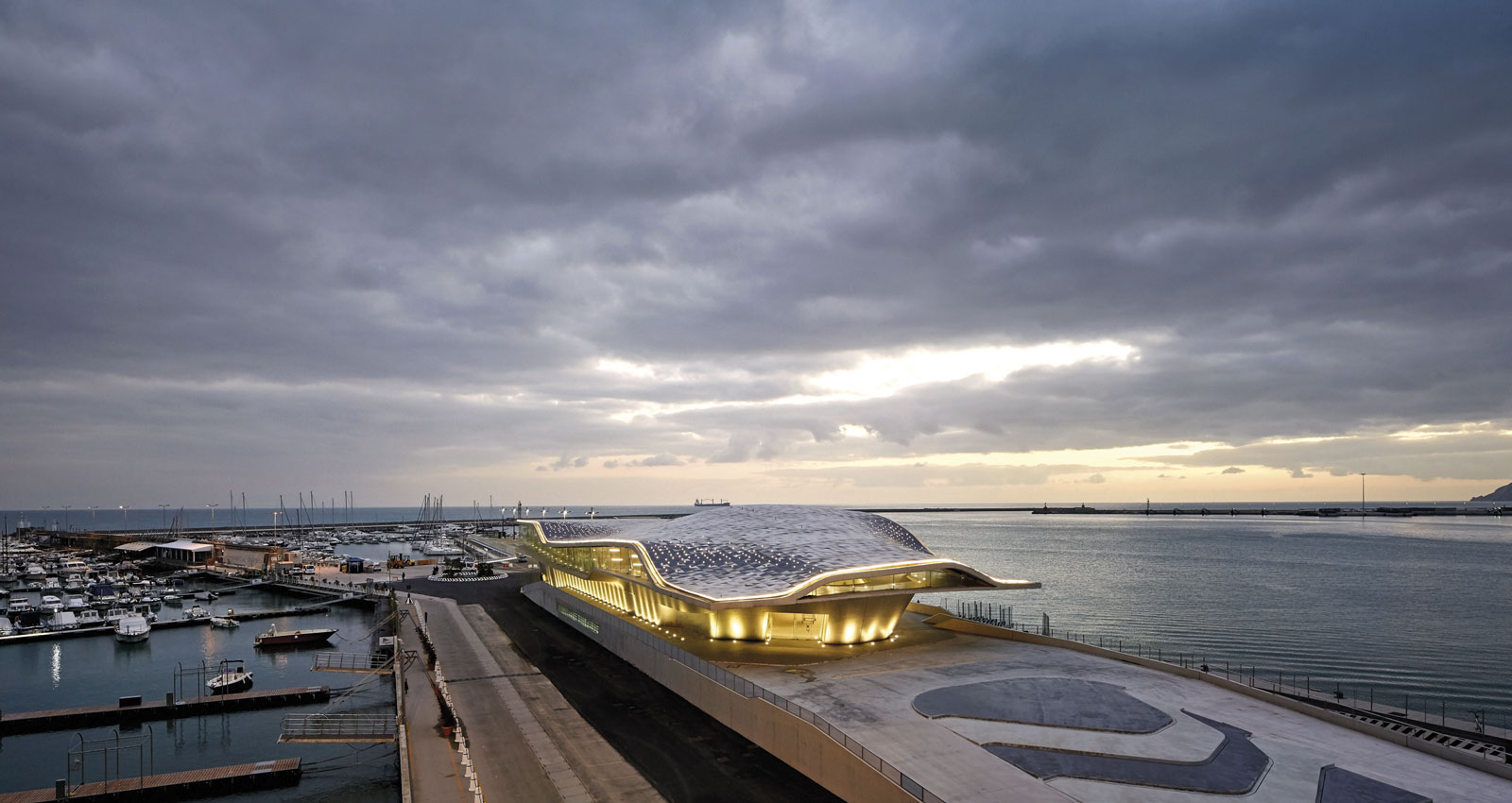
SALERNO MARITIME STATION Zaha Hadid Architects - crystallised porcelain stoneware covering
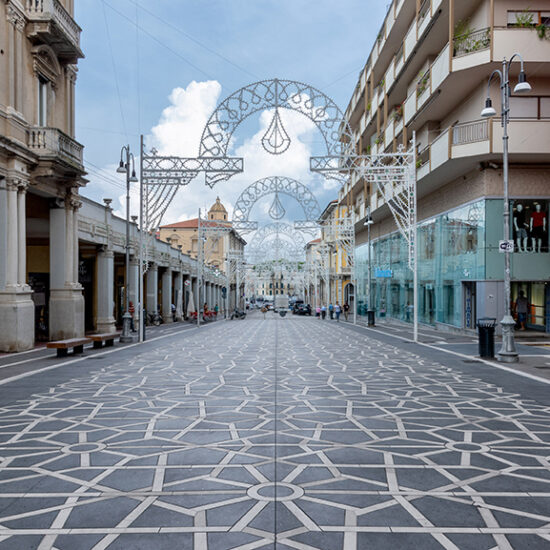
CORSO TRENTO E TRIESTE LANCIANO RicciSpaini Architetti Associati
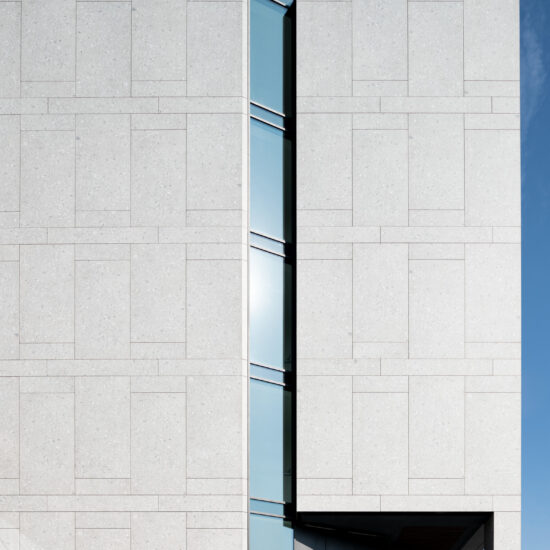
CERESIO BUILDING Asti Architetti - ventilated wall of large slabs
Sustainability
Marazzi Group has a long history of championing environmentally sustainable industry, with systems, processes and products certified in accordance with the strictest international standards and a corporate culture that has always placed people, limiting environmental impact and improving results – in other words, sustainability as defined today – at the centre of its development within its three pillars: environment, people and governance.
People
People, and their knowledge, experience and expertise, have always been the core resources for Marazzi’s development and growth.
Marazzi Group’s Code of Ethics commits the company to respecting personal dignity, safeguarding privacy, protecting the rights of children and implementing an eco-friendly industrial policy.
Continual staff training and development supports the company’s growth process, hand-in-hand with the huge investments made in new technologies and new plants. The Pietro and Maria Marazzi Training Centre provides a space of more than 1000 square metres for training activities for the entire workforce: more than 15,000 hours per annum dedicated to the development, safety and technical training of all staff.
2019 saw the birth of Marazzi Academy, a multi-company project aimed at building skills and knowledge, with a focus not only on internal development and use, but also on the local area, industry and district. The project is a tangible demonstration of the evolution of training within the company. These training courses were created to meet new demands related to business digitalisation and the need to develop and enhance project design skills.
The people-focus is also expressed through innovative, ground-breaking corporate welfare, performance bonus and flexi-working schemes.
Marazzi has been certified as a Top Employer for seven consecutive years. The Top Employers Institute is an independent international organisation which examines, analyses and certifies employment conditions within companies under various headings: Talent Management, Planning, Training, Corporate Culture and Corporate Welfare.
In 2019, with certification under the OHSAS 18001 standard, Marazzi confirmed its commitment to the continuous improvement of, and direct involvement of all staff in, itsOccupational Health and Safety management system.
Last but not least, the engagement and inclusion of the local community is one of the pillars of our social sustainability policy. The opening of the Crogiolo to the town of Sassuolo as a multifunctional location, the partnership with the City of Reggio Emilia for the creation of its first permanent public artwork Curiosa Meravigliosa by Joan Fontcuberta and the work created together with Simon Starling for the exhibition Metamorfuoco. Sotto la luce di Tintoretto at the Gallerie Estensi in Modena are just some examples of Marazzi Group’s cooperation with the local community.
The Planet
In 1974 Marazzi patented the revolutionary single-firing process, which drastically reduced energy use as products only had to pass through the kiln once; it is still the most widely used production method worldwide. Since then the company has continued along its path towards environmental sustainability by constantly improving its conservation of energy sources and raw materials, favouring circular use of
processing materials and recycling packaging, recovering scrap and making a vital contribution to making the ceramics industry a closed cycle one, with 100% recovery of all inputs.
The strong focus on product quality and environmental impact reduction are reflected by a long series of certifications and qualifications, starting with ISO 9001 Quality Management System certification, which Marazzi was the first company in the industry to obtain back in 1994, and Environmental Management System Certification under the ISO 14001 standard, awarded in 2003.
Products’ environmental impact throughout their life cycle, from extraction and processing of raw materials through to recycling of demolition spoil, are published in the Environmental Product Declaration (EPD) and in 2022 the company was one of the first in the world to achieve certification under ISO 17889-1, the world’s first international standard that assesses the sustainability of ceramic tiles in accordance with 38 qualitative and quantitative criteria covering environmental, social and economic performance.
Performance
Marazzi Group has adopted rules and instruments to ensure transparency, with which partners are also required to comply.
As a member of Mohawk Industries, Marazzi Group discloses information about its business, policies and performance through the Sustainability Report published by Mohawk Industries every year. This fundamental form of reporting combines with the public Quarterly Financial Statements, where stakeholders can monitor the company’s balance sheet, the achievement of its objectives and its main operations, such as direct investments and acquisitions.
For further information visit https://www.marazzi.pl/zrownowazony-rozwoj/
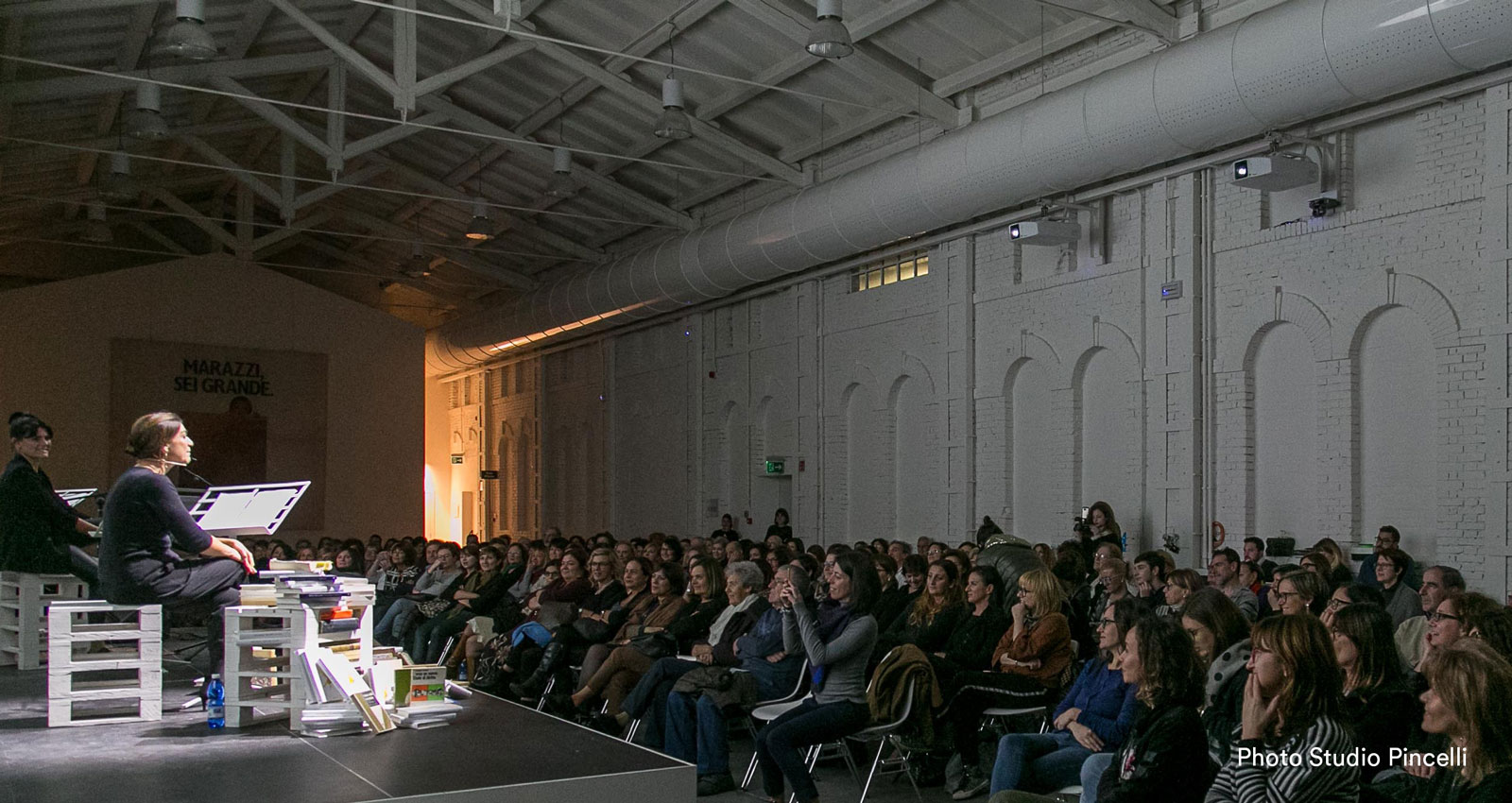
CROGIOLO MARAZZI
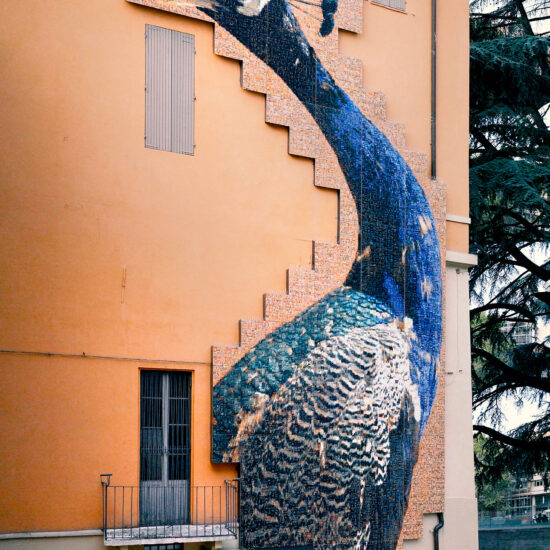
CURIOSA MERAVIGLIOSA Joan Fontcuberta
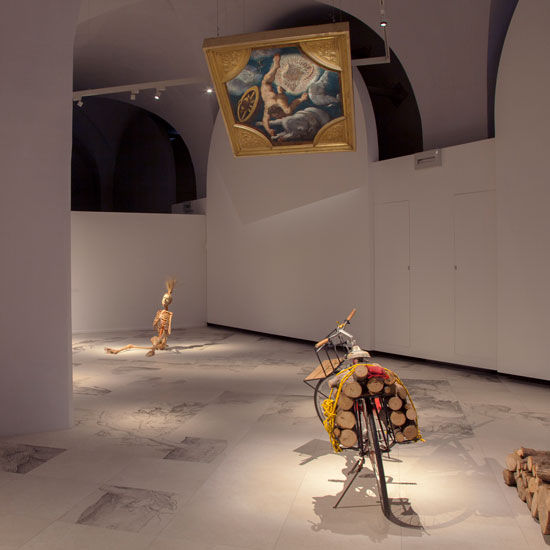
METAMORFUOCO Simon Starling